
(This is a continuing story – Part 2 is found here, or if you’re just dropping in please go here for Part 1)
We promised to have a weekly meeting, so Fred and I had to discuss what this next meeting looked like. At the first meeting, we sent the participants (eight, as I recall) back to their departments with this message: please give us everything that is bothering you – important to you for us to address. It was a pretty bold ask, for the transparency we needed, as well as some anonymizing characteristics as they were given to this Focus Group member.
[I want to acknowledge the work of Fred here, the Focus Group (later the ACT) was my vision, but he truly caught this vision, and started driving the organization toward it. Fred, in a a staff meeting, had me introduce the vision of the Focus Group, and then explicitly directed all his supervisors to provide one member of their team toward the effort. This represented commitment, and the starting hints for his own transformation.]
What came back was pretty long, and we started to push the feedback into buckets – “this is easy” (in Bosch terms, just do it), “I can work on this” ( just do it with more effort), “this is tough” (going to need a project), and “this is impossible”. I remember that Fred picked off a few of the “this is easy” topics right away, giving the team some trust that the feedback was not only listened to, but acted upon.
Pretty much from the beginning, I started using the phrase lancing the boil, which Susan would scrunch up her face and give me a “eww” every time (along with attended nervous laughter). I eventually changed to using more appropriate corporate cultural language, but Susan and I still made references to it years later, as Susan was the only one who saw the totality of the group – even when she changed departments, she still stayed.
The pus was all over us, but trust was building.
Some of the “I can work on this” and “this is hard” topics related to HR policies in the location, which was also manufacturing product, and need to have these policies match between manufacturing and service. As the manufacturing was larger than service at this moment (two thirds to one third), it was clear where this focus would be.
Mildred, the HR manager of the site, had a very interesting relationship with Fred; they had grown up together in the site, both achieving beyond expectation, both now managers. They were brother and sister; sometimes playful, sometimes incendiary, all times loyal. I’m sure Fred was discussing what we were doing with the Focus Group with her, keeping her abreast of developments, showing progress on the Associate Satisfaction Survey, and striving to not run afoul of already set policy.
The arc was clear, though – having Fred in the middle, carrying messages back and forth from the Focus Group to Mildred was not going to scale; Mildred had to see for herself. Bringing her into the Focus Group, after a few months was a decision placed in front of all the members – she wasn’t invited without everyone saying yes.
Her first meeting, we brought Mildred to speed; what we had accomplished, what was still pending, and what we needed her input, effort, or even total commitment toward. She was justifiably conservative, knowing what this means, and what cost she would bear. But, I sensed a curiosity building in Mildred as well, as she recognized the potential of a group like this for manufacturing.
However, manufacturing was steeped in command/control leadership, and the organization change would have been significant. Instead, Mildred assembled this feedback a different way, building a suggestion system that was giving back real incentives (Bosch Bucks, used for swag purchases). The kicker was that the suggestion board applied also to service, so now the associates could earn for their ideas, and the Focus Group had other input for their evaluation.
We could see the faint outlines of an improvement group, improvement system, and a working group that would take us to the next turn of the flywheel.
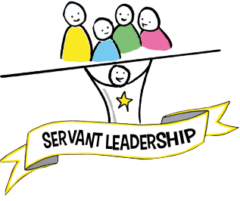
Servant Leader Lessons
Growth – Fred directed supervisors to assign members, but something shifted. He started seeing these eight not as complaint-gatherers but as people worth developing
Community – The Focus Group members stopped being individuals collecting pain points. They became a team with shared identity, explaining the work back to their departments.
Stewardship – Fred picked off the easy wins, moving them into the done pile; as this became more significant, more feedback could be given to enhance trust.
Conceptualization – The Focus Group built mechanisms to sort feedback into actionable buckets, recognizing some problems as ‘impossible’ while clearing the path to address what could actually change.