

Servant Leaders and Recognition

I’ve written earlier about how a servant leader struggles with their impact. But what happens when the positive measurement is brought to you?

In the life of the servant leader, sometimes comes recognition that this leader has impact, and others recognize this. It may be in the currency of compliments, awards, or even compensation.

I use a test myself to measure the guardrails of the servant leader, to make sure the desire to serve remains the utmost goal:

Did I seek this?

A recognition sought by any means is anathema to the servant leader. Awareness must be brought to the motives of the leader, and purging of the dross must happen, else The Impostor is reigning. He is cunning, skillful, and corrupting, and must be diligently guarded against.

Should I share this?

Rarely is recognition of a leader happening in a vacuum, but it is a reflection of those being led. Broadening the context of the recognition, giving due to the community that the leader serves, is modeling the Best Test when it would be tempting to keep the recognition to yourself.

Does this feel like just flattery?

Sometimes recognition is given that is bereft of meaning. Recognition like this can be met with grace, depending on the giver – someone in power may not be ready to hear rejection.

Sharp awareness when this type of recognition is given avoids the regrets later — holding it loosely, allowing it to drain away, defeating the haunting chimes of The Impostor taking hold.

Is the group giving this?

A group well-served may choose to give regard to the leader. These moments can be deeply satisfying, but also raise underlying tension, as the group may feel led rather than supported. Addressing these moments when they come is recognition as well. Sometimes a skillful reversal, a pull-in of the group is warranted; sometimes meeting it with uncomfortable grace is best.


When recognition has come to my life, I have not always been up to the task, been blindsided by it, and caught in its charm. The Impostor is always close at hand. But asking these questions quickly forms the wall I need, the wisdom to detect sincerity.

The cost of servant leadership is not without reward, just that the rewards must be worthy of the cost.
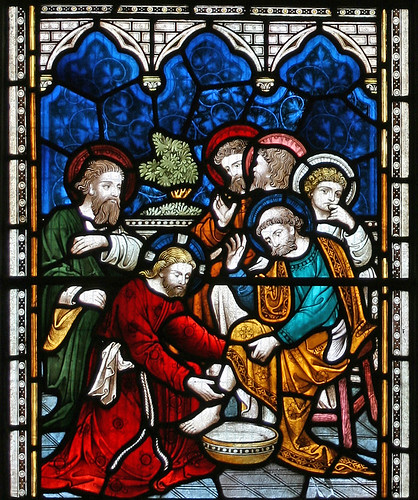

My basis for Leadership – Jesus

“Jesus washes his disciples feet, Soham” by TheRevSteve is licensed under CC BY-NC-SA 2.0

As a Christ-follower, my first and primary motivation for this posture of being a servant is Jesus himself.

You see, Jesus came not to rule, nor to make bad people good, but to save us – save us from our rebellious attitude toward God. He does this by showing us the way of His kingdom, and paying the price for our rebelliousness by giving up His own life – the ultimate act of service.

God authorized this by raising Jesus from the dead, something we celebrate every Easter.

This is great news!

Reversals (The Kingdom Way)

Jesus often spoke of the different way of His kingdom. He embodied the tension between overthrowing and working for the current world systems with one goal – God’s purpose in this world. This video does a great job of expressing this third way:

The Way of the Exile

This then, brings us back to leading by serving (a reversal). He shows that the power of leading comes from this attitude of laying down your rights/desires/motivations as a leader, and start by seeing others more important than yourself:

Jesus called them together and said, “You know that the rulers of the Gentiles lord it over them, and their high officials exercise authority over them. Not so with you. Instead, whoever wants to become great among you must be your servant, and whoever wants to be first must be your slave— just as the Son of Man did not come to be served, but to serve, and to give his life as a ransom for many.”

Matthew 20:24-28 (NIV)

So then, as one who isn’t part of the current system (an exile), and yet called to be part of the system, my desire for greatness is subverted, converted into servanthood.

However, Jesus doesn’t just leave us in this state. In fact, Jesus makes this astounding turn in the priestly prayer chapter of John:

I’ve told you these things for a purpose: that my joy might be your joy, and your joy wholly mature. This is my command: Love one another the way I loved you. This is the very best way to love. Put your life on the line for your friends. You are my friends when you do the things I command you. I’m no longer calling you servants because servants don’t understand what their master is thinking and planning. No, I’ve named you friends because I’ve let you in on everything I’ve heard from the Father

John 15:14-16 (The Message)

Jesus is the master of the next-level; by following his invitation to be a servant He mysteriously transforms us into His friend. He allows us to see what God is doing, and invites us into the decision!

Because of all this, I am a Christ-follower, and I strive to be a servant.

Basics of Servant Leadership

“gogogo” by SHANIDAN.COM is licensed under CC BY-NC 2.0

Robert Greenleaf is the acknowledged father of the discipline of Servant Leadership (although by no means the originator, as we will discuss in future posts). His model, though, is a good place to start our discussion:

Servant leadership is a philosophy and set of practices that enriches the lives of individuals, builds better organizations and ultimately creates a more just and caring world.

Robert Greenleaf

He describes this Servant Leader moving into 3 distinct phases:

  • The Natural Desire“It begins with the natural feeling that one wants to serve, to serve first”
  • The Conscious Choice – “Then conscious choice brings one to aspire to lead…”
  • The Best Test – “The best test, and difficult to administer, is: do those served grow as persons…”

I can attest to this natural flow in my life, as someone who is serving eventually comes to a place where giving to a group puts you into a natural leadership position. It doesn’t come from desiring or pulling this leadership role -grasping for it will result in other leadership styles.

Greenleaf’s determination of success, then, is not directly tied to the leader, but to the group being served. As this is difficult to measure, and reflected in the natural human choices of the group being served, it is doubtful that any performance indicator can be made for this kind of leader.

This philosophy has far-reaching consequences, and is the burning desire of this blog.