
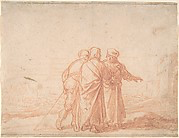
Today, I’ve been vexed by a small passage in Luke 24. Two people, one named Cleopas, were heading to Emmaus from Jerusalem, despondent, probably trudging. Jesus appears and walks alongside, hidden from them for the time, asking about what they are talking about. He listens, giving space and time for their grief. But, there’s a sudden turn:
He said to them, “How foolish you are, and how slow to believe all that the prophets have spoken! Did not the Messiah have to suffer these things and then enter his glory?” – Luke 24:25-26 NIV
This seems to be harsh, even unloving. But, digging down, foolish is probably a harder word than Jesus used – the Greek word anoetoi is closer to “unperceiving” than “stupid.” It’s not “you’re idiots.” It’s “you’re not seeing what’s right in front of you, and you have everything you need to see it.”
They had all the information — they even know about the empty tomb and the angels’ report (Luke 24:22-24). They just can’t assemble it into meaning. They’re not ignorant. They’re grief-stuck. The data is all there and they can’t see it because their framework for what the Messiah was supposed to do has collapsed.
Notice what Jesus does right after — he doesn’t lecture them for being slow. He walks them through the whole narrative, Moses through the prophets, and lets the story do the work. He doesn’t say “I’m the Messiah, you fools.” He shows them the shape of the story and lets them arrive at recognition on their own. Which they do — but not until Emmaus, at the table, in the breaking of bread. The head knowledge from the road wasn’t enough. It took embodied encounter.
Jesus didn’t mince words, didn’t back away from the confrontation, but lands a sharp word with grace afterwards. In other words, Jesus listened, gave a rebuke, then showed truth. Discovery, definition, and agency on a walk to a small town.
My experience also shows that wounds can be inflicted when the larger healing of the group is necessary.
During a Philmont trek, the crew had abandoned the Ranger-trained cooperative dish-washing system in favor of “everyone washes their own.” I found a dirty dish at camp and trash near the bear bags. At supper, I expressed direct anger about the lapse — not out of control, but clear and pointed. The crew was shaken. The Chaplain (one of the leadership positions of a crew) was incensed.
This even escalated to our feedback rounds later, where the Chaplain directly asked me about feedback that I had given about using the prescribed methods of cleaning, which I was glad to expound upon. This, as you may imagine, continued the feelings of anger (rage may be a better word).
But, after the feedback session, with everyone stewing, I patiently asked for Roses, Buds, and Thorns (giving more of an emotional tone from the day). The crew lit up, sharing stories of their Baldy summit: the difficulty of the climb, standing at the top, mini-bears that tried to steal their lunch, the pound cake they’d hauled up and wished they’d saved a piece. I ended the rounds with the Roses, in order to quell the hard feelings of confrontation.
The next morning, the Chaplain was navigator. Walking together on the trail, I asked a few questions of him, being the second in line: “Was I out of control last night?” No. “Can a servant leader express anger directly?” Yes, after thinking. “Did you see what I did with the Roses?” A look of recognition crept over the Chaplain’s face as he understood: healing can take place after the catharsis.
Servant leaders are unafraid of emotions that are hard, and sometimes deliver these emotions without fear. And, servant leaders don’t wound and leave, they wound and stay to heal afterwards.