The Impostor
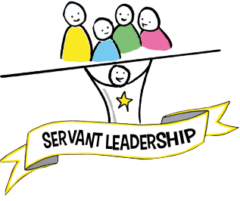
When searching for content about Servant Leadership, I’ve seen it in hundreds of LinkedIn posts, books about how to “effectively serve while leading”, even the BSA NYLT curriculum. This is a pseudo-form of Servant Leadership, and right now, I’m calling it what it really is:
It’s really “Others-First” Leadership.
It has many expressions:
- “Others-First” leadership has motivation to help others, while secretly wanting to call back to itself, to use the language of service while remaining fundamentally self-oriented
- “Others-first” leadership cloaks selfish ambition, hiding behind the tenets of holistic philosophy, taking a shortcut though the dark places of our soul
- “Others-first” leadership only uses the principles that may help; only asking how to lead in a way that serves others
- “Others-first” leadership is fundamentally about the leader being good at leading, of considering technique, optimization, and performance hacking the highest standard
What Was Lost
We’ve lost the inner orientation – the spiritual/philosophical/moral foundation that makes servant leadership more than just enlightened self-interest. We’ve lost the soul and power of how leaders fundamentally serve.
Witness the progression that happened in the last 50 years. Greenleaf discovers Servant-Leadership (although I would contend that he elucidates it). He builds a masterpiece of a library, of his talks and thoughts (although others would struggle to find organization in this chaotic struggle he faced). Spears picked this up, and developed 10 characteristics, giving more feet to how servant leaders really act and operate. Consultants and other marketers see a list, and know right away it can be packaged into bite-sized chunks, without the struggle that Greenleaf and Spears underwent. And, now we’re left with principles without the life-giving force that gives them power!
How to Recognize the Difference
Robert Greenleaf was clear about this:
Servant leadership is a philosophy and set of practices that enriches the lives of individuals, builds better organizations and ultimately creates a more just and caring world
We quickly and easily to move to “set of practices”, without considering the philosophy behind. These practices, while valuable, considerate, and helpful, come from the philosophy first and foremost – the deep well of decision to serve, to set your life aside, to consider others above yourself, to disappear in the flow.
Corruption or bypassing this philosophy is subtle, but striking when you see it. Take Spear’s 10 principles:
- Listening – The “Others-First” leader listens to people because engaged people are productive, work harder, and express loyalty toward organizational goals. The Servant Leader listens because they believe that people have inherent worth and wisdom that deserves reverence, even when the listening gets hard.
- Empathy – The “Others-First” leader understands the emotional states of those they lead just to help manage people effectively, building rapport that increases their influence, connecting to improve performance. The Servant Leader gives the person honor and understanding of their experience from within their frame of reference, placing themselves in that person’s position, walking in their shoes to respond to their wholeness as two image bearers of God.
- Healing – The “Others-First” leader brings healing because healed people can feel oriented, and have a veneer of security and stability. Servant Leaders bring healing because brokenness is a condition of humanity, and this patient application of soul-change will allow the person to flourish
- Awareness – The “Others-First” leader keeps a keen eye out for disturbances in the people they lead to head off potential issues later, and never turns the spotlight to their own soul. Servant Leaders bring awareness from themselves (inside-out) to others, uncovering their own awful truths, surfacing conflict, healing the wounds that revelations make.
- Persuasion – The “Others-First” leader employs tactics to head toward agreement, even to the point of manipulation; it is really “command-and-control” in a friendly, smiling package. The Servant Leader employs humble openness, holding ideas and direction loosely, knowing that the best solution usually doesn’t reside with just one person.
- Conceptualization – The “Others-First” leader sees what is best for themselves or the organization, and focuses their efforts to conform to this understanding (the very nature of “Human Resources”). The Servant Leader sees each person’s unique potential and dreams, believing organizational prosperity flows naturally from human flourishing rather than conformity to institutional objectives.
- Foresight – The “Others-First” leader sees the future as potential risk, and takes steps to avoid failure, often papering over this frantic activity with documentation like risk registers. The Servant Leader embraces intuition, slows the emotional roll, applies their moral grounding, builds time into the decision, and feels settled in its application before building any documentation for the organization.
- Stewardship – The “Others-First” leader manages resources and people effectively and competently, toward organizational effectiveness and waste minimization. The Servant Leader holds resources and people in sacred trust, knowing they are a temporary caretaker that is responsible to those served, future generations, and the God who provided them.
- Growth – The “Others-First” leader embraces the person and equips them to be the best worker they can be (training, mentoring, even other development work) . The Servant Leader sees the person as a whole person, invests in their complete development, bringing out the best worker as a byproduct.
- Community – The “Others-First” leader builds coalitions, with an improvement direction, even cohesiveness for all members (shared organizational goals, improved metrics). The Servant Leader creates genuine community where members serve the growth of each other, take unlimited liability for each other’s wellbeing, and willingly sacrifice personal advancement for communal flourishing.
Do you see the difference? Do you see the subtle corruption?
I’ve cloaked myself in powerless “others-first” leadership – it’s seductive, shows well on a CV, and makes you a marketable entity. Some of these blog posts, and LinkedIn content, upon further reflection, take this counterfeit stance. I’m declaring that this stops right now!
Hearing from the Founder

I’ve stood at Robert’s grave, looking at my own life, in the shadow of this giant, wondering if I will ever have the impact he did in his 86 years – impact that did not come from just going through the motions of identifying and promoting good principles.
I’ve stood at Robert’s grave, considering his claim to life – “Servant-Leader, Philosopher, Writer”. He didn’t start with what he did (philosophy, writing) – he started with his identity – Servant-Leader. An identity rooted in the wisdom of the ages – a deep understanding of taking up his cross, casting aside all grasping, and resting.
I’ve stood at Robert’s grave, looking and pondering the meaning of his epitaph: Potentially a good plumber, ruined by a sophisticated education. He’s calling us, in the humor of the philosopher, to something larger than ourselves. He’s sticking out his tongue at us; to not take ourselves too seriously, to jump into the flow of service and follow it to the place of impact.
The Call to Restoration
The call of Jesus is clear and unmistakeable; we must strap on the towel and wash the feet of those we serve, without any grasping of attention, or feeding our self-ambition. God will exalt us, just as He exalted Jesus:
Think of yourselves the way Christ Jesus thought of himself. He had equal status with God but didn’t think so much of himself that he had to cling to the advantages of that status no matter what. Not at all. When the time came, he set aside the privileges of deity and took on the status of a slave, became human! Having become human, he stayed human. It was an incredibly humbling process. He didn’t claim special privileges. Instead, he lived a selfless, obedient life and then died a selfless, obedient death—and the worst kind of death at that—a crucifixion.
Because of that obedience, God lifted him high and honored him far beyond anyone or anything, ever, so that all created beings in heaven and on earth—even those long ago dead and buried—will bow in worship before this Jesus Christ, and call out in praise that he is the Master of all, to the glorious honor of God the Father.
— Philippians 2:5-11, The Message
The comments are open, and I welcome all feedback!