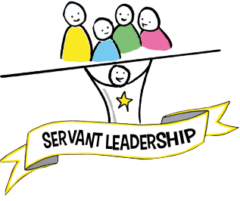

I’ve engaged with a number of other management philosophies, and they seem to come down to a set of criteria that define good management skills. For instance, from Indeed – 5 Essential Management Skills:
- Leadership – including skills such as decisiveness, team building, empathy, conflict management, and motivating others
- Planning – including vision, critical thinking, flexibility, and problem-solving skills
- Strategy – including creativity, conflict resolution, and problem-solving
- Communication – including listening, negotiation, persuasion, building relationships, teamwork
- Organization – including goal setting, project management, time management, and scheduling
You can certainly notice that some of the Servant Leader principles already show up directly. Indirectly, there are many more we can check off – vision is covered by conceptualization, for example.
However, Robert Greenleaf probably said this best, in the economic way he defines:
It is the ability to state a goal and reach it, through the efforts of other people, and satisfy those whose judgement one respects, under conditions of stress.
Robert Greenleaf, Something to Hope For
Further in the Indeed article, you get an appreciation of how to build these skills, which I would say is a tripartite approach – test yourself by doing, appeal to others by mentoring, and gain feedback by asking others (I would say that this is valuable from many levels, including those being led).
A Servant Leader uses the skills of awareness and listening, along with the conscious choice to lead in pursuit of building these other management skills, knowing all along that those being led are of higher significance, and success is only measurable by their achievement1; at the heart is only the desire to serve2.